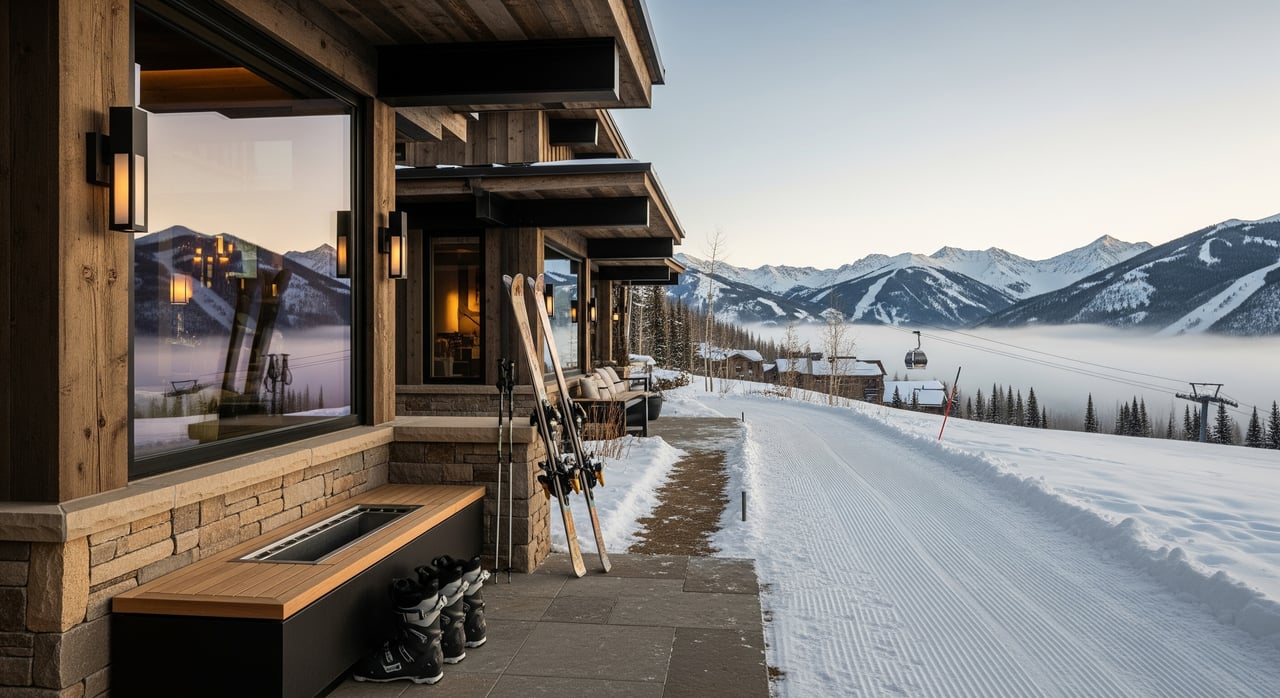
What does “ski‑in/ski‑out” really mean in Mountain Village? If you have toured listings, you have seen the phrase used often and in different ways. You want real convenience for your time on the mountain and clarity for resale. This guide gives you plain‑English definitions, a checklist you can use on any property, and local context so you can separate true on‑snow access from clever marketing. Let’s dive in.
The real meaning of ski access
True ski‑in/ski‑out
Definition: You can click into your skis or board at the building or doorstep, slide onto a maintained trail or run that leads to a lift or base area, and return so you can remove skis at your door. You do not cross a public road, parking lot, or busy pedestrian path.
How to verify:
- A direct, groomed or designated ski trail connects the property exit to a lift or maintained run, with no road crossing.
- You do not carry gear more than a very short distance, typically less than about 50–100 feet, and you do not need to navigate stairs or a steep paved walk in ski boots.
- There is a recorded easement or resort trail designation that allows skier passage, not just informal permission.
- The property has features that support direct skiing, such as a private ski access gate, exterior ski room, on‑site ski locker, or slope‑facing entry.
- You confirm in ski season by riding the run back to the property and removing skis at the entry without obstacles.
Ski‑access
Definition: You reach skiing with a short non‑ski segment. This might be a brief walk, a connector sidewalk or staircase, a quiet road crossing, an elevator, or a short shuttle to a lift or run. You can access the mountain easily, but not entirely on snow.
How to verify:
- Measure the connector distance in steps and minutes, both in street shoes and while carrying skis.
- Note whether the connector is groomed or maintained in winter.
- Confirm whether you must cross a public road, parking area, or plaza where you will likely remove skis.
Gondola‑adjacent
Definition: You are within a very short walk of a gondola terminal but not directly on a ski run. You can board the gondola for transport to town or to lifts, which is excellent for daily life. It may not allow you to ski back to your door.
How to verify:
- Count steps and time from your entrance to the gondola queue.
- Check the actual boarding route, including any stairs, ramps, or indoor passages where you must carry gear.
Translate listing language
- “Slope‑side” usually means you can see the run. Verify whether you can actually step onto it.
- “Walk to lift/gondola” can range from a quick stroll to a strenuous climb. Measure distance and elevation change.
- “Steps to the gondola” sounds easy, but stairs with ski boots can feel long. Confirm the path.
Why Mountain Village changes the equation
The gondola is daily transit
The Mountain Village–Telluride gondola is a year‑round public link used by residents, guests, and second‑home owners for dining, groceries, and events. Proximity to the gondola delivers major lifestyle convenience even if a property is not true ski‑in/ski‑out. Being near the gondola can reduce the need for a vehicle and simplifies guest logistics.
Steep terrain and elevation
Mountain Village sits on steep, terraced hillsides with bridges, stairs, and elevators connecting levels. A short horizontal distance can involve meaningful elevation change. What reads as a “short walk” in a listing can feel different with skis and boots, so it is essential to time and test routes in person.
Trail designations and maintenance
Resort‑groomed runs offer the most reliable access. Private or neighborhood trails can be less consistent and may depend on HOA agreements or easements. Always confirm whether a connector is an official resort run, a private gated trail, or just a pedestrian path that is not meant for skiing.
Snow removal and guest flow
Snow removal policies and schedules vary by HOA and neighborhood. That affects whether sidewalks and entries are cleared during big storms. For second‑home owners who host guests or rent, easy load‑in, short transfers, and clear wayfinding strongly influence the experience.
Liability and safety
Slope‑side properties often include recorded easements and liability language within HOA documents. While avalanche risk is generally low inside developed village areas, you should verify whether any resort mitigation or seasonal routing affects your intended access path.
How to verify a listing’s ski access
Pre‑visit research
Ask for these items before you fly in:
- A labeled site plan that shows your entrance, nearest groomed run, lift or gondola terminal, and any required crossings.
- Documentation of recorded easements or covenants that permit skier passage to and from the property.
- Maintenance responsibilities for the connector. Confirm who grooms or clears it in season.
- Details on practical features like ski storage, boot drying, heated entry, and slope‑facing access.
- HOA rules covering skier traffic, exterior gates, and guest parking and towing.
On‑site verification in ski season
Do an in‑season test. Small details matter most when you are in boots.
- Ski out from the nearest lift or run and then ski back. Confirm you can remove skis at the property entrance without crossing a road or navigating awkward stairs.
- Time and count steps from the building entrance to the gondola boarding area and from the ski exit to the nearest lift. Repeat while carrying skis.
- Observe signage, gates, and temporary closures. Ask resort staff about typical drifting or snow issues along the connector.
Title, HOA, and legal documents
Request and review:
- HOA covenants and bylaws that address trail access, easements, and maintenance.
- A title report or plat that shows recorded skier easements.
- Any notices about potential trail reroutes, infrastructure projects, or policy changes that could alter access.
Amenities that signal true convenience
Look for on‑site features that support smooth ski days and better guest experiences:
- Ski locker and heated boot room close to the exit.
- Exterior slope‑facing access, covered ski racks, and heated entries.
- Concierge or valet services and immediate guest load/unload zones.
- Clear guest parking options and simple wayfinding from parking to the unit.
Comparing properties quickly
Use this simple template for each listing you tour:
- Category: True ski‑in/ski‑out, Ski‑access, or Gondola‑adjacent
- Distance: Steps and minutes from entrance to nearest lift or gondola
- Obstacles: Road crossings, stairs, private gates, or long indoor corridors
- Seasonality: Is the route groomed or maintained in season, year‑round, or not at all
- Recorded easement: Yes, No, or Unknown
- On‑site amenities: Locker, boot room, ski storage, valet, load/unload zone
- HOA/maintenance notes: Who clears snow, gate policies, guest access rules
- Suggested action: Request site plan and schedule an in‑season walkthrough
How access affects your daily life and resale
Daily rhythm
True ski‑in/ski‑out means fewer transitions and more time on snow. Ski‑access or gondola‑adjacent can still deliver an easy day if the connector is short and well maintained. In Mountain Village, many owners value a combination of quick gondola access for dining and events plus straightforward routes to a lift.
Guest experience and rentals
If you host friends or consider rental income, look at guest flow. Clear parking, short transfers, and reliable winter maintenance reduce friction. Properties that genuinely deliver on‑snow convenience and smooth arrivals often command stronger demand and better occupancy, but you should confirm with local managers and actual rental histories.
Liquidity and premiums
Direct, verifiable access tends to be prized in resort markets. In Mountain Village, the premium for true ski‑in/ski‑out varies by micro‑location, unit type, and buyer demand. Use local MLS comparables and real rental performance to quantify any premium rather than relying on generic percentage ranges.
Operating costs
Slope‑side buildings can carry higher HOA or maintenance costs tied to snow management, insurance, and year‑round upkeep of entries and trails. Include these in your ownership math to arrive at a realistic net cost.
Smart next steps with a local advisor
If ski access is a priority, align your search with clear, testable criteria. Ask for a labeled site plan, recorded easement language, and HOA rules before you tour. Then schedule an in‑season verification to feel each route with your own gear and timing. A focused, document‑backed approach helps you choose a property that supports the way you actually live and ski in Mountain Village.
When you are ready to evaluate specific addresses, request a private consultation with The Agency Telluride. Our leadership‑driven team pairs local expertise with thoughtful, research‑based guidance so you can buy with confidence in this unique on‑mountain market.
FAQs
What does “true ski‑in/ski‑out” mean in Mountain Village?
- It means you can start and end your day on skis right at your door via a maintained run, with no road crossings and no long walks or stairs in ski boots.
How does gondola proximity compare to ski‑in/ski‑out convenience?
- Gondola‑adjacent living is excellent for daily transit, dining, and getting to lifts, but it may not let you remove skis at your door, so weigh your priorities.
Can I rely on a listing that says “ski‑in/ski‑out” without proof?
- Treat it as a marketing claim until you confirm with a site plan, recorded easements, and an in‑season on‑site test of the exact route.
What documents protect my right to use a ski connector?
- Look for recorded easements on the title or plat and HOA covenants that specifically allow skier passage and outline maintenance responsibilities.
How do Mountain Village stairs and elevation impact “short walk” claims?
- Terrain can make a short distance feel longer in boots, so time routes and count steps and stairs while carrying gear before you decide.
What affects resale value most: on‑snow access or gondola closeness?
- Both matter, but premiums vary by micro‑location and unit type; use local comps and real rental histories to quantify the value in your target category.